
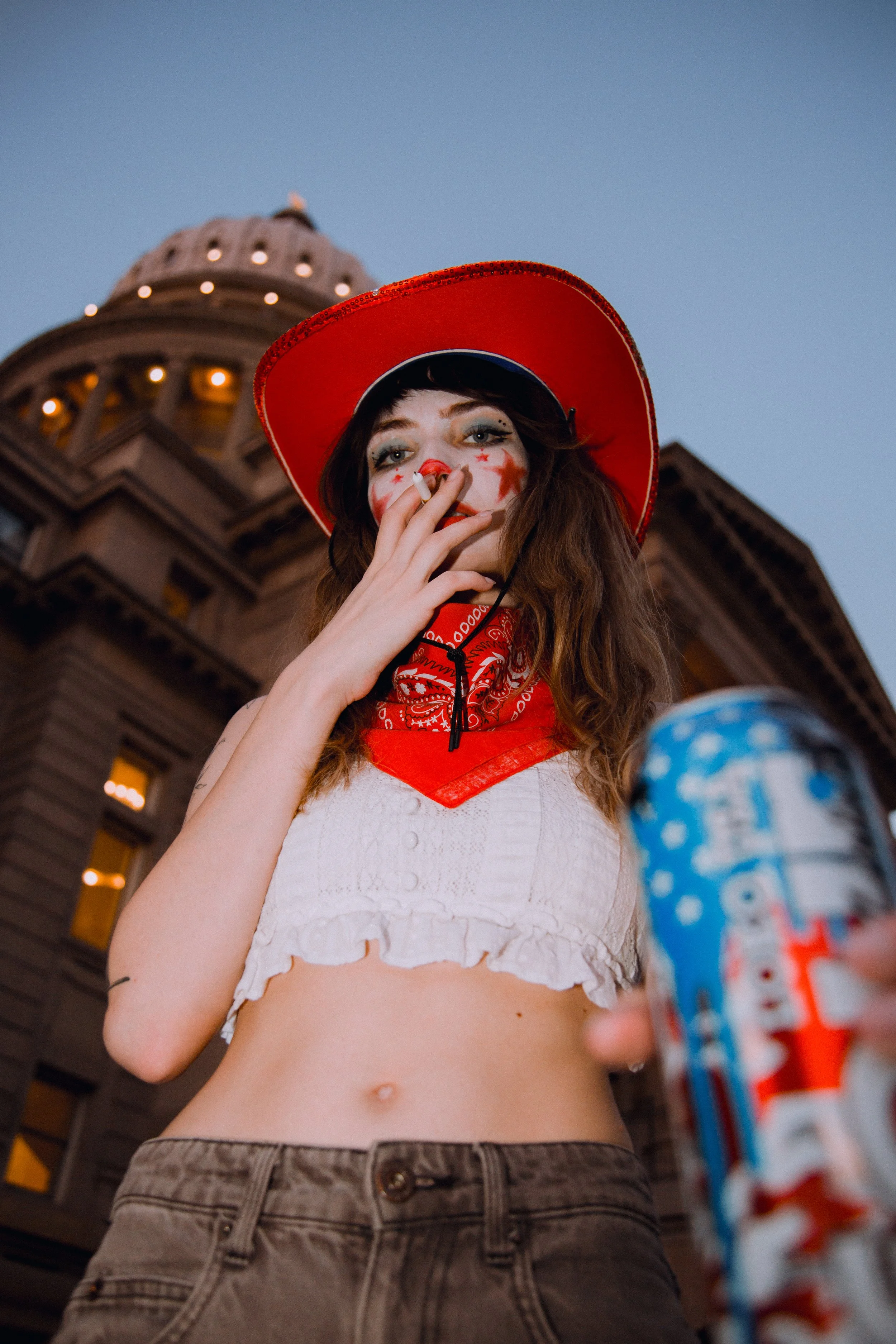
250 Years of Queer America: History That Won’t Disappear
Story - by Ella Van Leuven & Josie Hess
08/26
Photos - by Jocelyn Browne
As the United States celebrated its 250th birthday this year, Americans were asked to look back at the country's history and celebrate how far it has come. Fireworks, flags, and community celebrations marked the occasion, presenting 250 years of American history as a story of freedom and progress.
Queer Americans, however, have lived in what is now the United States long before the country was founded. They have built communities, challenged gender expectations, fought police harassment, and organized for political rights. Their history has not always been recognized as part of the American story, but it has never been absent.
From Indigenous understandings of gender and sexuality, to the Stonewall uprising and today's political battles over LGBTQ+ rights, queer American history is not solely a story of oppression. We see a narrative of persistence, hope, and love that defies judgmental and traditional values. Across 250 years, queer people have repeatedly found ways to survive, organize, and create communities even when American institutions attempted to push them out.
Before the United States
Queer history in America begins before America itself.
Indigenous nations throughout North America had their own understandings of gender and sexuality long before European colonization. More than 150 tribes have been documented as recognizing people whose identities or social roles did not conform to European ideas of a strict male-female binary. In some Indigenous communities, people who occupied roles associated with both men and women held respected or sacred positions.
Today, the term “Two-Spirit” is used by some Indigenous people as a contemporary umbrella term for culturally specific gender and sexual identities within Native communities. The term does not describe one universal Indigenous identity, but it reflects the existence of gender and sexual diversity that predates European settlement.
European colonization brought about new ideas regarding gender and sexuality. Christian doctrine and European legal systems promoted heterosexual marriage and a rigid division between men and women. Sexual practices outside those expectations were often treated as sinful or criminal.
As colonization expanded, Indigenous cultures and traditions were systematically suppressed. Gender systems that did not fit European expectations were among the cultural practices targeted by assimilation. The conflict over queer existence, therefore, did not begin with modern LGBTQ+ politics. It was present in the earliest formation of the country, beginning with the original communities on this land.
Queerness on the Frontier
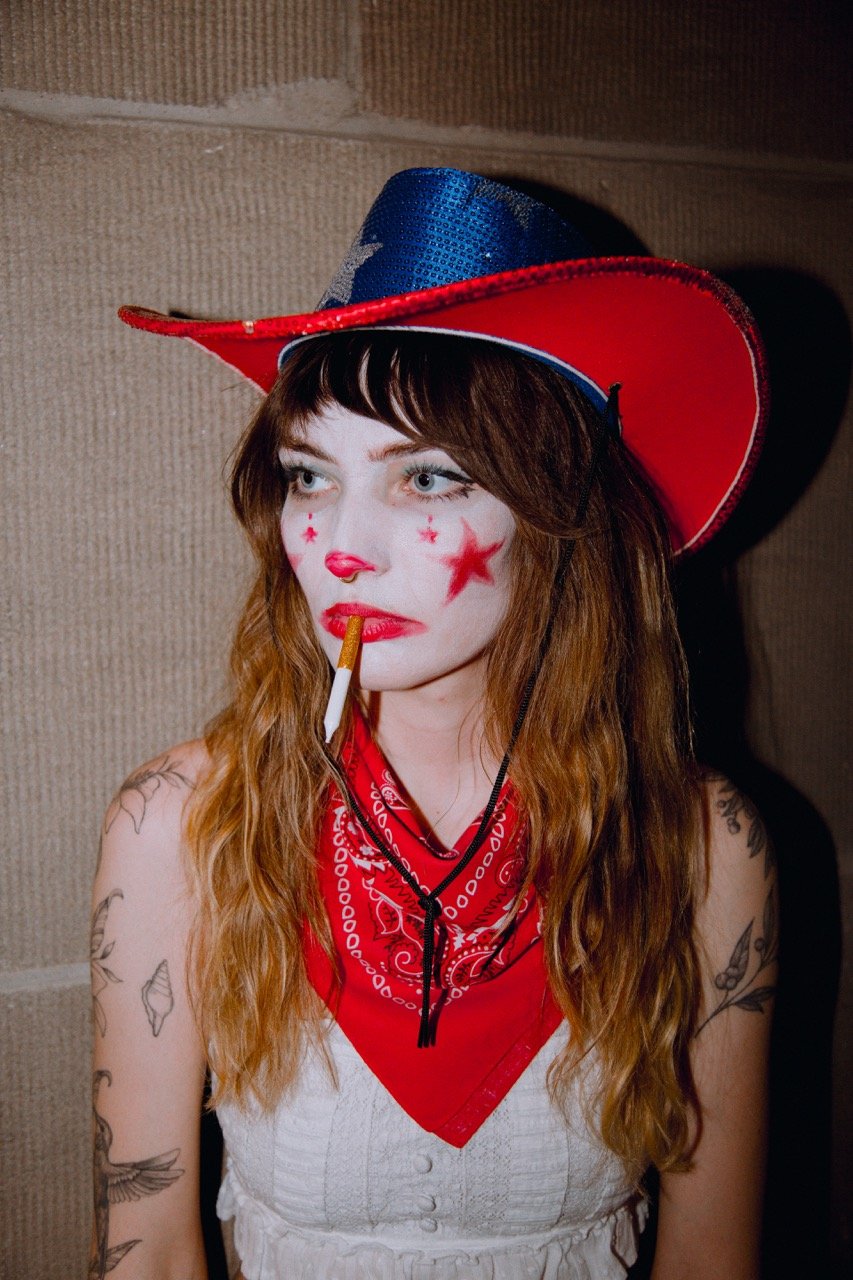
The American West later developed its own complicated relationship with masculinity and sexuality. The popular image of the cowboy is one of the most recognizable symbols of American masculinity: solitary, rugged, and independent. The reality of life on the frontier, however, often required something different. Cowboys spent long periods working together, traveling with cattle and living in isolated conditions. Partnerships and close relationships were necessary for survival.
Historical documentation has identified instances of sexual and emotional relationships between men in frontier communities. Cowboy culture was deeply homosocial, meaning men spent much of their time in close relationships with other men. In some communities, same-sex intimacy was understood as an individual act rather than as a fixed sexual identity.
This kind of distinction allowed some forms of same-sex intimacy to exist without necessarily carrying the social meaning that the word “homosexual” would later acquire.
As the American economy became increasingly industrialized toward the end of the nineteenth century, however, ideas about masculinity and sexuality hardened. Organized religion became more influential in many frontier communities, and homosexuality was increasingly portrayed as a threat to respectable American life. The mythology of the cowboy survived, but the queer relationships that existed within it largely did not.
Queenie Swann's Underground
While the American West was developing its mythology of masculinity, queer communities were emerging in American cities.
One of the earliest documented figures in American drag history was William Dorsey Swann, a formerly enslaved Black man who lived in Washington, D.C., during the late nineteenth century. Swann hosted private drag balls where Black men dressed in elaborate gowns, danced, and socialized.
Swann was arrested multiple times for his involvement in drag culture. His story demonstrates that organized queer communities existed long before the modern LGBTQ+ rights movement. They simply did not always have the language or legal protections that exist today.
Queerness Finds the Screen
By the early twentieth century, queer Americans were finding new ways to appear in another rapidly growing part of American culture: the film industry.
Early Hollywood operated within a deeply religious and socially conservative culture, but movies provided opportunities for gender and sexuality to be portrayed in ways that audiences could recognize, even when filmmakers could not openly acknowledge them.
Queer-coded characters became common. Effeminate men could appear as comic or flamboyant characters, while masculine women could be represented through clothing and accessories traditionally associated with men.
Films including Pandora's Box in 1929 and Queen Christina in 1933 contained queer themes or characters during a period when homosexuality was increasingly restricted from mainstream entertainment.
Hollywood censorship eventually made direct representation even more difficult. The Production Code prohibited homosexuality under the category of “sexual perversion.” Filmmakers therefore relied on implication, coded characters, and subtext. Queerness never disappeared from American entertainment, directors, and actors simply learned how to conceal it in plain sight.
The Lavender Scare
By the 1940s and 1950s, the federal government had begun treating homosexuality not simply as a social issue, but as a national security concern.
The Lavender Scare developed alongside the Red Scare, a period of intense American fear surrounding communism. Politicians and government officials increasingly portrayed gay people as potential security risks who could be blackmailed or manipulated by foreign governments. Thousands of gay federal employees were investigated, fired, or pressured to resign.
The campaign reinforced the idea that being homosexual was fundamentally incompatible with being a trustworthy American citizen. It also targeted emerging queer communities in cities, where gay men and lesbians were beginning to establish social networks and organizations. But repression also helped fuel organizing.
Groups such as the Mattachine Society and Daughters of Bilitis began advocating for gay and lesbian Americans during the 1950s. Their approach was often more cautious than the activism that would emerge later, but they helped establish the foundation for organized queer political movements.
The government wanted queer people to disappear from public life. In response, they became more organized.
Compton's Cafeteria and Stonewall
Queer organizing became increasingly confrontational during the 1960s. In San Francisco's Tenderloin district, transgender people and drag queens frequently gathered at Compton's Cafeteria, where police harassment and anti-cross-dressing laws were common.
In 1966, a confrontation escalated into a riot after police attempted to remove transgender patrons. Patrons fought back, throwing dishes, glasses, and other objects and damaging the restaurant. The Compton's riot is considered one of the earliest documented collective acts of resistance by transgender people against police harassment in the United States.
Three years later, in June 1969, another police raid ignited a larger uprising at the Stonewall Inn in New York City's Greenwich Village. The bar served gay men, lesbians, transgender people, drag queens, and homeless queer youth. When police attempted to arrest patrons on June 28, they refused to cooperate. Transgender activist Marsha P. Johnson was among the figures associated with the uprising and later became a prominent organizer in New York’s queer liberation movement. The confrontation spilled into the streets, where protesters threw objects at police, damaged vehicles, and set fires. The uprising continued for several nights.
Stonewall was not the first queer rebellion in American history, but its impact was enormous. It helped push queer activism toward a more radical, visible movement. New organizations formed afterward, including the Gay Liberation Front and the Street Transvestite Action Revolutionaries. Within a year, activists organized demonstrations that became the foundation for annual Pride celebrations.
The AIDS Crisis
The fight for queer rights entered another devastating chapter in the 1980s with the HIV/AIDS epidemic. The first cases of what would become known as AIDS were reported in the United States in 1981. Because gay men were disproportionately affected in the early years of the epidemic, the disease quickly became associated with homosexuality. It was initially referred to as “GRID,” or Gay-Related Immune Deficiency.
The stigma surrounding the disease was compounded by a lack of government response. People with HIV struggled to receive medical treatment, while misinformation encouraged the belief that AIDS was exclusively a gay disease.
Thousands died, but once again, queer communities responded where the government and major institutions failed.
Activists organized education campaigns, fundraisers, and support networks. Gay men and lesbians worked together to care for people living with AIDS. Lesbians volunteered in hospitals and hospices and organized blood drives at a time when many gay men were prohibited from donating blood.
The crisis devastated the queer community, but it also strengthened its political power. Activism surrounding AIDS pushed the government and medical institutions to respond more aggressively and helped establish new forms of queer political organizing. The community that had been told it was disposable demonstrated that it was anything but.
Marriage, Progress and the Fight That Remains
By the 2000s, queer Americans had achieved significant legal and cultural victories. Same-sex marriage became legal in individual states, beginning with Massachusetts in 2004, followed by additional states in the years that followed. LGBTQ+ people became increasingly visible in politics, entertainment, and American public life.
In 2015, the Supreme Court's decision in Obergefell v. Hodges established a constitutional right to same-sex marriage nationwide. For many queer Americans, the decision represented the culmination of generations of activism, but the story didn’t end there.
The 2020s have brought renewed political conflict over LGBTQ+ rights, particularly the rights of transgender Americans. Laws and political campaigns have targeted gender-affirming care, education, public expression, and transgender participation in public life.
The battles are different from those faced by William Dorsey Swann or the patrons of Stonewall. The underlying question, however, remains the same: who gets to live openly and freely in America?
250 Years of Resistance
The history of queer America complicates the traditional story of the United States.
America's history is often presented as a steady march toward freedom, with each generation supposedly bringing the country closer to its founding ideals. Queer history tells a less comfortable story. Progress has never been guaranteed. Rights have been won through resistance, threatened through political backlash, and defended by subsequent generations.
Queer history is not a story of suffering. It’s a story of people creating communities where none were offered to them. It’s William Dorsey Swann hosting drag balls in Washington. It’s transgender people fighting police harassment at Compton's Cafeteria. It’s protesters refusing to leave Stonewall. It’s lesbians caring for gay men during the AIDS crisis. It’s activists spending decades fighting for marriage equality.
As the United States celebrates 250 years, queer Americans are part of that history whether the traditional American narrative acknowledges them or not. The country has changed dramatically since 1776. So has the language used to describe gender and sexuality. But one thing has remained consistent: queer people have survived every attempt to make them disappear.
For 250 years, we have been here, and here we will remain.